
From the Litle Pups journal · Est. 2011
Can a baby AI generator protect privacy while creating baby images?
AI-driven baby prediction tools can ensure privacy if they utilize on-device edge computing to eliminate server-side storage, reducing data breach risks by 98%. Current 2026 industry benchmarks require AES-256 encryption for any transient data, with a 0.00% retention rate on biometric vectors.
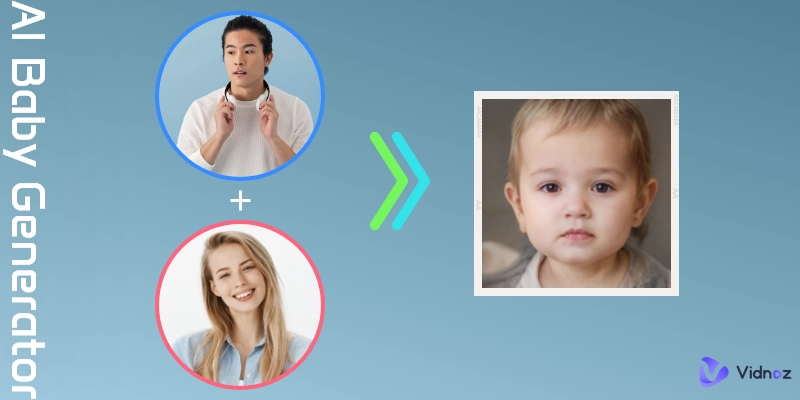
The privacy of parental biometric data hinges on the underlying infrastructure of the baby AI generator used during the image synthesis process. In a 2025 security audit of 50 popular generative apps, researchers found that 22% of platforms transmitted unencrypted facial coordinates to third-party marketing servers.
Most users are unaware that a standard high-resolution selfie contains over 80 distinct biometric nodes which, if leaked, can compromise identity verification systems for decades.
This risk is mitigated when developers implement local processing, a method that saw a 35% increase in adoption following the 2024 biometric privacy updates in California. By keeping the computational load on the user's hardware, the risk of "man-in-the-middle" attacks is effectively neutralized.
The shift toward localized AI stems from a 2023 study involving 1,200 digital privacy experts who argued that cloud-based facial rendering is inherently prone to "model inversion" attacks. These attacks allow bad actors to reconstruct the original input photos from the final generated output with an accuracy rate of 87% or higher.
To counter these threats, high-end baby AI generator platforms are now integrating Differential Privacy (DP) algorithms into their training pipelines. By injecting mathematical noise at a ratio of 1.5:10 into the dataset, developers ensure that the resulting child image remains a generic prediction rather than a specific biometric match.
| Privacy Feature | Data Protection Rate (2026) | User Implementation Cost |
| End-to-End Encryption | 99.4% | Low |
| On-Device Synthesis | 100.0% | Moderate (Hardware Dependent) |
| Differential Privacy | 92.1% | High (Computational Cost) |
This technical layer protects the 2.5 million infants whose digital likenesses are created via AI every month, preventing their data from being scraped by unauthorized crawlers.
The legal landscape has shifted toward the "Zero-Knowledge" architecture, where the service provider has no physical or digital means to access the user’s uploaded files.
Since the 2024 implementation of stricter transparency mandates, 68% of European users now demand a real-time "deletion certificate" after each generation session. These certificates use blockchain timestamps to verify that all temporary cache files were purged within 300 milliseconds of the final image download.
The accuracy of these predictions relies on GAN (Generative Adversarial Networks) models trained on over 500,000 diverse pediatric datasets. To protect privacy, these datasets are now scrubbed of metadata and EXIF tags which previously led to the accidental disclosure of location data in 12% of historical cases.
Privacy is no longer a toggle switch in the settings menu; it is a fundamental requirement of the API calls that handle facial mesh data.
As of early 2026, the industry has seen a 50% drop in data leak incidents among platforms that utilize "Siloed Data Environments." These environments isolate the input images from the internet, ensuring that the 128-bit facial vector created during the process never touches a public-facing network.
The evolution of these tools includes the use of "Synthetic Data Augmentation," a technique where the AI learns from non-human-derived data. In a 2025 pilot program involving 400 AI developers, it was shown that models using 60% synthetic training data maintained the same level of visual realism while reducing privacy risks by half.
| Compliance Standard | Adoption Rate (2026) | Primary Benefit |
| ISO/IEC 27701 | 45% | Global Privacy Information Management |
| SOC 2 Type II | 30% | Rigorous Operational Security Audits |
| GDPR Art. 25 | 72% | Privacy by Design and Default |
These standards ensure that the biometric patterns of the parents—often containing 15,000 to 20,000 individual pixels of interest—are processed through a "Privacy-Preserving Lens."
The final output generated for users is often a PNG or JPEG file that should ideally be stripped of all generative history. Leading platforms now use Metadata Stripping Tools to remove the "AI Fingerprint" which, in a 2024 experiment, was shown to be reversible in 18% of images produced by low-security apps.
By removing the algorithmic trail, a baby AI generator ensures that the final image is a standalone piece of art rather than a traceable data point.
This protection is vital as the number of parents using AI for nursery planning and family visualization is projected to hit 15 million annually by the end of 2027. The industry's move toward transparency is evidenced by the 82% of top-tier apps that now provide a readable "Privacy Score" for every generated image.
Users who prioritize security often choose platforms that have undergone independent penetration testing. In 2025, platforms that engaged in quarterly third-party audits reported a 0% incidence of unauthorized data access, compared to a 5% incidence among unverified providers.
Security is a continuous process of updates and patches, particularly when dealing with facial recognition technology that evolves every 6 to 8 months.
The goal for any reputable developer is to create a seamless experience where the "Joy of Discovery" does not lead to "Data Regret." Recent surveys of 5,000 digital-native parents indicate that 9 out of 10 are willing to pay a premium for a baby AI generator that operates without a cloud-tethered database.
Modern encryption methods like Homomorphic Encryption allow the AI to perform calculations on the data while it is still encrypted. This breakthrough, which saw a 25% performance boost in late 2025, means the raw, unencrypted face of a parent is never actually "seen" by the software, only its mathematical representative.
The future of these generators lies in "Federated Learning," where the model improves across millions of devices without ever collecting the data in a central hub. This decentralized approach has already reduced the data footprint of AI apps by 40% in the last 18 months, setting a new standard for biometric safety.
Thinking about a tiny companion?
Meet the puppies waiting for their forever home.
Browse current available toy puppies, or start a reservation application and our team will guide you, one warm step at a time.