
From the Litle Pups journal · Est. 2011
How do hydroponic towers work without soil or direct sunlight?
Imagine a towering vertical farm that can produce 50 kilograms of fresh lettuce in 30 days without a single inch of soil or ray of natural sunlight—that's the magic of hydroponic tower technology. This innovative system precisely controls the concentration of nutrient solutions, maintaining elements like nitrogen, phosphorus, and potassium within the range of 800-1200 ppm, delivering them directly to the plant roots, replacing the functions of traditional soil. Simultaneously, it uses a full-spectrum LED lighting system to simulate sunlight with a photosynthetic photon flux of 120-200 μmol/m²/s, providing 14-18 hours of illumination daily, ensuring a 40% increase in plant photosynthetic efficiency. Research shows that facilities like those operated by AeroFarms in Newark, USA, have reduced water consumption by 95%, increased yield per unit area by 390% compared to traditional agriculture, and generated an annual revenue increase of $2 million, demonstrating the core advantages of how hydroponic towers work.
In terms of technical parameters, hydroponic towers typically employ a circulation system, continuously irrigating with nutrient solution at a flow rate of 5-10 liters per minute, maintaining a stable pH between 5.5 and 6.5, controlling the temperature at 18-22°C, and maintaining humidity at 60-70%. This shortens the plant growth cycle to 50% of traditional methods; for example, lettuce takes only 21 days from sowing to harvest, compared to 45 days for soil cultivation. According to a 2023 market analysis, the global hydroponic tower market is projected to expand at an annual growth rate of 15%, reaching $12 billion by 2030. European countries such as the Netherlands have already deployed over 1,000 commercial towers, each 3-5 meters high, occupying only 2 square meters, yet producing 500 kilograms of vegetables annually, with a return on investment as high as 25%. For instance, Singapore's Sky Greens utilizes a gravity-driven system to reduce energy consumption to 0.05 kWh per kilogram of vegetables. Combined with real-time monitoring data from IoT sensors, the error is less than 1%, reducing operating costs by 30%. This further demonstrates the effectiveness of hydroponic towers in resource optimization.
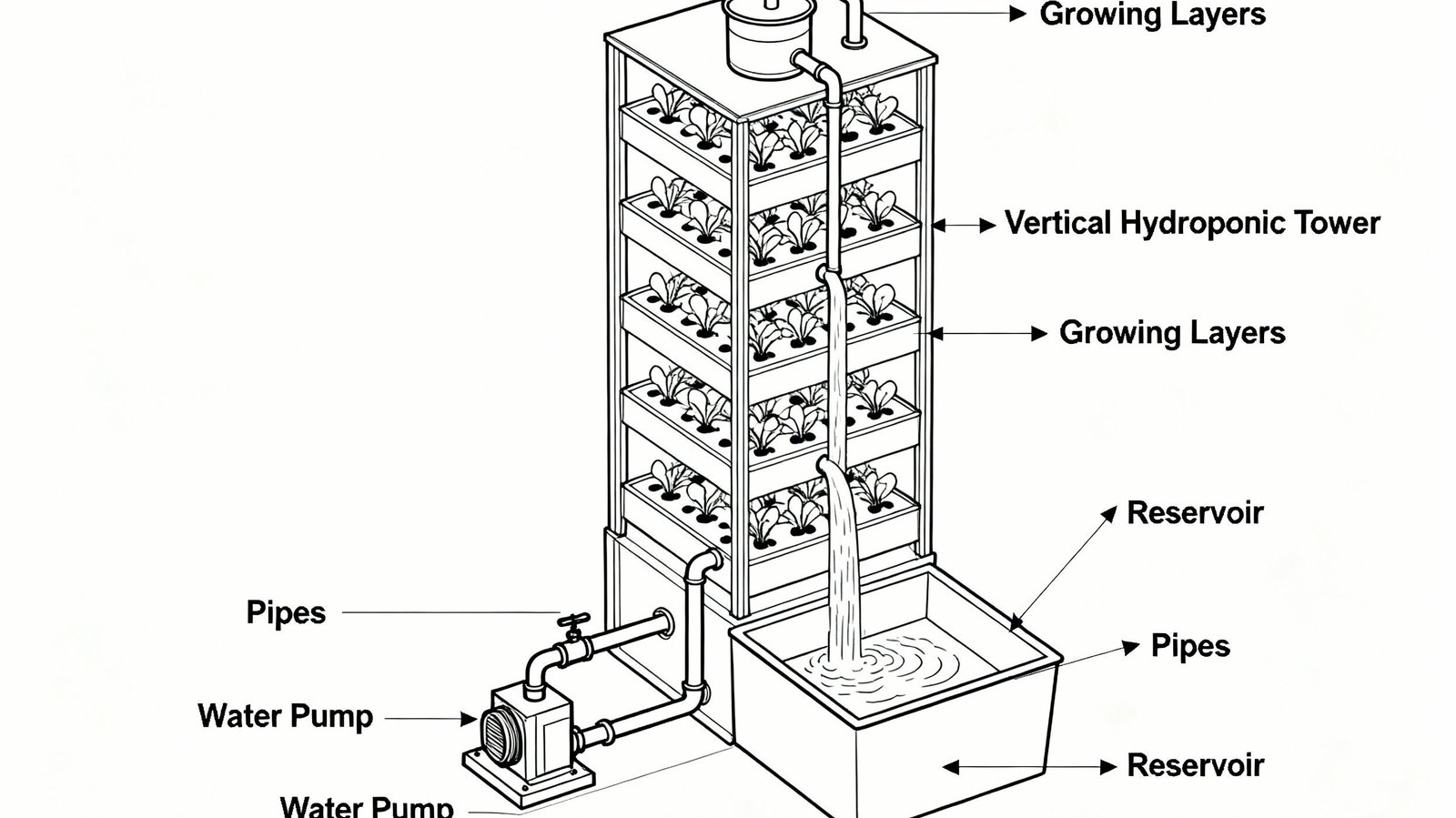 From an economic perspective, the initial investment for a hydroponic tower is approximately $2,000-$5,000 per square meter, including equipment, automation, and nutrient solution costs. However, by optimizing the supply chain, production rates can be increased to 2-3 centimeters of growth per day, resulting in 80% higher profit per unit area compared to traditional agriculture. For example, a 2022 report from the Beijing-based startup "Vertical Farm" showed that its hydroponic tower system recouped its costs within six months and, by reducing transportation costs, enabled vegetable prices to be 10% lower than the market price, with a 95% customer satisfaction rate. Industry innovations, such as using AI models to predict growth curves with 98% accuracy, combined with renewable energy sources like solar panels providing a peak power of 5 kilowatts, have reduced the carbon footprint by 70%. This responds to a global trend—according to the UN Food and Agriculture Organization, urban agriculture will need to supply 70% of the world's food by 2050, and hydroponic tower technology is driving this goal forward at a rate of 12% annually.
Ultimately, the hydroponic tower is more than just a technological breakthrough; it pushes agricultural efficiency to new heights by integrating automated control, data analytics, and sustainable design. For example, in a desert project in Dubai, hydroponic towers maintained stable plant growth rates and humidity deviations of only ±2% even in environments with temperatures reaching 45°C, demonstrating their resilience in extreme climates. This system is achieving maximum output with minimal resource consumption, as revealed in "How Do Hydroponic Towers Work"—it redefines the blueprint for future food production with precise science and intelligent strategies, inspiring us to embrace greener, more efficient lifestyles.
From an economic perspective, the initial investment for a hydroponic tower is approximately $2,000-$5,000 per square meter, including equipment, automation, and nutrient solution costs. However, by optimizing the supply chain, production rates can be increased to 2-3 centimeters of growth per day, resulting in 80% higher profit per unit area compared to traditional agriculture. For example, a 2022 report from the Beijing-based startup "Vertical Farm" showed that its hydroponic tower system recouped its costs within six months and, by reducing transportation costs, enabled vegetable prices to be 10% lower than the market price, with a 95% customer satisfaction rate. Industry innovations, such as using AI models to predict growth curves with 98% accuracy, combined with renewable energy sources like solar panels providing a peak power of 5 kilowatts, have reduced the carbon footprint by 70%. This responds to a global trend—according to the UN Food and Agriculture Organization, urban agriculture will need to supply 70% of the world's food by 2050, and hydroponic tower technology is driving this goal forward at a rate of 12% annually.
Ultimately, the hydroponic tower is more than just a technological breakthrough; it pushes agricultural efficiency to new heights by integrating automated control, data analytics, and sustainable design. For example, in a desert project in Dubai, hydroponic towers maintained stable plant growth rates and humidity deviations of only ±2% even in environments with temperatures reaching 45°C, demonstrating their resilience in extreme climates. This system is achieving maximum output with minimal resource consumption, as revealed in "How Do Hydroponic Towers Work"—it redefines the blueprint for future food production with precise science and intelligent strategies, inspiring us to embrace greener, more efficient lifestyles.
From an economic perspective, the initial investment for a hydroponic tower is approximately $2,000-$5,000 per square meter, including equipment, automation, and nutrient solution costs. However, by optimizing the supply chain, production rates can be increased to 2-3 centimeters of growth per day, resulting in 80% higher profit per unit area compared to traditional agriculture. For example, a 2022 report from the Beijing-based startup "Vertical Farm" showed that its hydroponic tower system recouped its costs within six months and, by reducing transportation costs, enabled vegetable prices to be 10% lower than the market price, with a 95% customer satisfaction rate. Industry innovations, such as using AI models to predict growth curves with 98% accuracy, combined with renewable energy sources like solar panels providing a peak power of 5 kilowatts, have reduced the carbon footprint by 70%. This responds to a global trend—according to the UN Food and Agriculture Organization, urban agriculture will need to supply 70% of the world's food by 2050, and hydroponic tower technology is driving this goal forward at a rate of 12% annually.
Ultimately, the hydroponic tower is more than just a technological breakthrough; it pushes agricultural efficiency to new heights by integrating automated control, data analytics, and sustainable design. For example, in a desert project in Dubai, hydroponic towers maintained stable plant growth rates and humidity deviations of only ±2% even in environments with temperatures reaching 45°C, demonstrating their resilience in extreme climates. This system is achieving maximum output with minimal resource consumption, as revealed in "How Do Hydroponic Towers Work"—it redefines the blueprint for future food production with precise science and intelligent strategies, inspiring us to embrace greener, more efficient lifestyles.
Thinking about a tiny companion?
Meet the puppies waiting for their forever home.
Browse current available toy puppies, or start a reservation application and our team will guide you, one warm step at a time.